
Commercial guide
Stripping out an automotive shop: hoists, pits and floor drains
An automotive shop is built around heavy equipment, fluids and concrete. When a tenant moves out, the space has to be cleared of all of it before a new use can move in.
Some of that work belongs to the tenant, some to the owner and some to the demolition crew. Knowing who does what keeps the job clean.
- Automotive shops
- Industrial units
- Strip-outs
MetroPoint Demolition planning guide · Published 2026-09-28. Confirm property-specific requirements with the responsible authority and qualified project professionals.
What the outgoing tenant handles first
Before the crew arrives, the tenant is responsible for:
- Removing oils, coolants, fuels and other fluids
- Taking out compressors, tanks and portable equipment
- Arranging environmental decommissioning through their own contractor
- Clearing tools, parts and stored materials
The demolition crew starts only once the unit is empty of these items.
Above-ground hoists
Two-post and four-post hoists bolted to the slab are decommissioned first, with hydraulic fluid drained and power disconnected. The crew then unbolts and lowers each hoist with the right equipment. Anchor bolts left in the concrete are cut flush or removed, depending on the scope.
In-ground hoists and pits
In-ground hoists and service pits are a different matter. What happens to them, and what the ground beneath looks like, is an owner and environmental consultant decision made before any concrete is broken. The demolition crew does not remove soil. Once the owner and consultant have set the plan, the crew can break and remove concrete as directed.
Keeping these decisions with the owner and consultant protects everyone. The crew simply works to the written direction it receives, and nothing below the slab is disturbed on assumption.
Floor drains and interceptors
Shop floor drains usually lead to an interceptor that collects oil and sediment. Before any removal, a qualified contractor pumps and cleans the drains and interceptor. The appropriate plumbing trade confirms required isolation, capping and disconnection before the demolition crew removes released components within the scope and protects drains from debris.
Shop drains and interceptors need to be dealt with before nearby concrete or flooring is disturbed. The outgoing tenant or owner arranges a qualified contractor to pump and clean the interceptor and connected drainage components, keeping that work separate from general demolition. The cleaning step removes liquids and settled material that a demolition crew is not equipped to collect or transport. Once service is complete, the status of each grate, trench and interceptor cover is confirmed on site. Drains staying for the next use are covered against fragments and fine dust, while components scheduled for removal are clearly marked. The crew does not assume that a dry-looking drain is empty or abandoned. Any unclear connection returns to the owner and the relevant contractor before cutting proceeds. Concrete around a retained drain is broken in controlled sections so the body and connected piping are not cracked by impact. If the interceptor is leaving, its limits and the surrounding slab work follow the owner's written plan after cleaning. Openings are guarded and kept free of debris throughout the work. Removed grates and metal components are sorted separately where appropriate. Coordinating cleaning before demolition prevents a stop after the slab is already open and protects the building drainage from material that could create a blockage beyond the unit.
Concrete anchors and slab patches
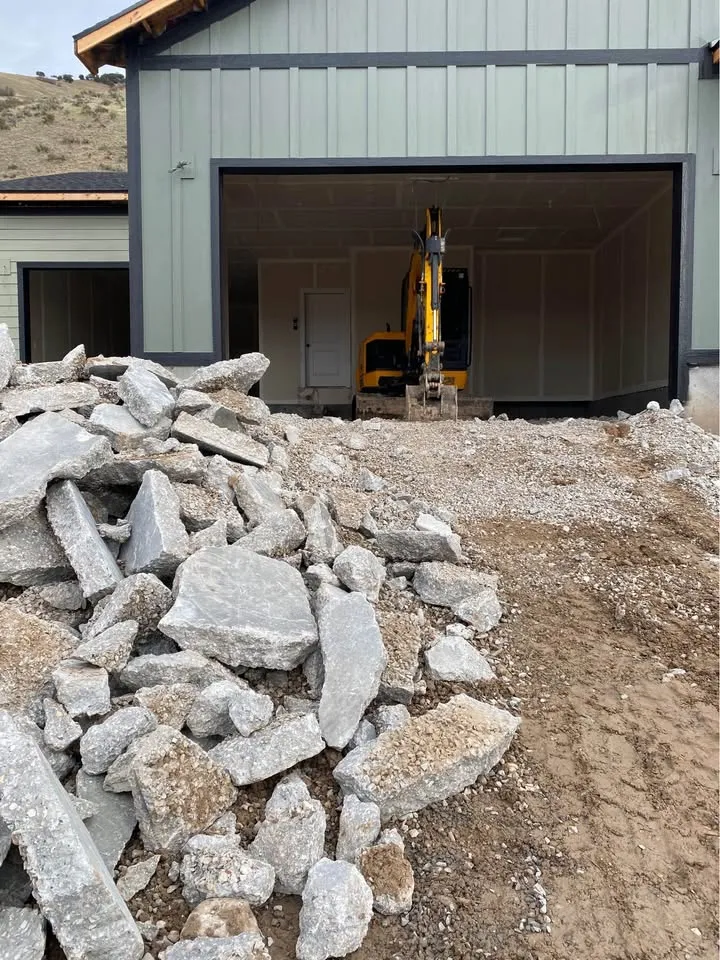
Years of equipment leave the slab full of anchors, cut-outs and old patches. Depending on the next use, the scope may call for anchors to be ground flush, damaged areas to be broken out or trenches to be cut for new services. Our concrete breaking and removal service handles that slab work.
When to bring in a professional
Automotive units involve environmental responsibilities, heavy equipment and concrete work. Bring in an environmental consultant for the owner's side, qualified contractors for fluids and drains, and a demolition crew for the equipment and slab. Each has a clear role.
The earlier those roles are agreed, the smoother the handover. A short meeting between the owner, the outgoing tenant and the demolition contractor before the lease ends usually settles who is responsible for each item and when the unit will actually be empty.
Primary planning references
An automotive shop strip-out works when the tenant, owner, consultant and crew each handle their part in order. For hoist removal and slab work in a commercial unit, MetroPoint Demolition Toronto can scope the job once the tenant and owner steps are complete.
Frequently asked questions
- Who removes the waste oil and fluids?
- The outgoing tenant, through a licensed waste carrier. Oils, coolants, fuels and other shop fluids must be removed before demolition begins. The demolition crew does not handle them. If containers are left behind, the owner and tenant need to resolve their removal before the strip-out is scheduled.
- Can in-ground hoists be removed by the demolition crew?
- The crew can break and remove concrete around them once the owner and their environmental consultant have decided how the hoist and the ground beneath will be handled. The crew does not excavate or remove soil. Those decisions and any soil work are managed by the owner and the consultant.
- What happens to the interceptor?
- It is pumped out and cleaned by a qualified contractor first. After that, it may stay in place for the next tenant or be removed, depending on the owner's plans. Cleaning before removal prevents oil and sediment from spilling during demolition.
- Will the slab need to be replaced?
- Usually not the whole slab. Most shop strip-outs deal with anchors, cut-outs and damaged patches. The owner decides how much repair is needed for the next use. Concrete work is then scoped separately so the new tenant gets a floor suited to their needs.