
Commercial guide
Demolishing a restaurant interior: hoods, ducts, grease traps and gas lines
On paper, a restaurant strip-out looks like any commercial interior job: walls, ceilings, floors and fixtures come out. In practice, the kitchen changes everything.
Gas, fire suppression, refrigeration and grease all have to be dealt with before a crew can safely begin, and the floors alone can take longer than the rest of the unit. Here is what sets these jobs apart.
- Restaurants
- Commercial kitchens
- Strip-outs
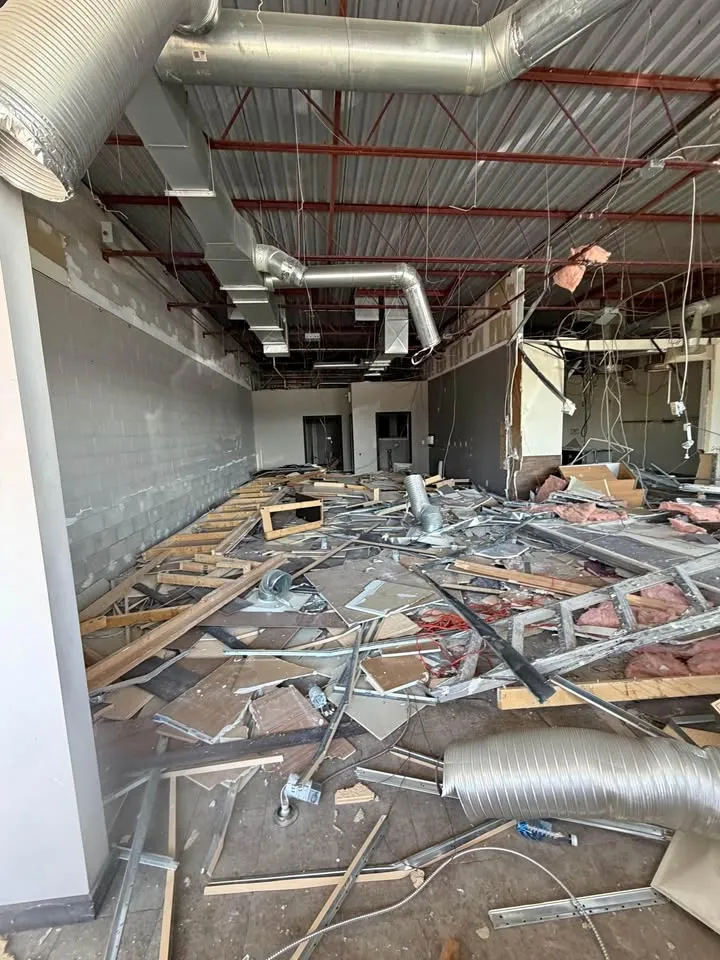
MetroPoint Demolition planning guide · Published 2026-09-28. Confirm property-specific requirements with the responsible authority and qualified project professionals.
The trades that go before demolition
Several specialist trades have to finish their part before the demolition crew touches the kitchen. The usual order:
- A licensed gas technician shuts off and caps the gas supply to every appliance
- The fire protection contractor takes the hood fire suppression system out of service
- A certified refrigeration technician recovers refrigerant from walk-ins and reach-ins
- A pumping contractor empties and cleans the grease interceptor
Each step removes a hazard that could injure the crew or damage the building if skipped.
Taking down the exhaust hood and grease duct
Commercial hoods are large, heavy and coated in grease, and the duct that carries exhaust to the roof is the same. Crews typically disconnect and lower the hood in controlled steps, then cut the duct into manageable sections. Everything grease-laden is kept apart from clean debris so it does not contaminate recyclable metal or other material. Where duct passes through other floors or shared shafts, the landlord confirms what belongs to the unit before anything is cut.
A commercial hood is one of the heaviest single fixtures in a restaurant strip-out, and residue inside the system makes clean handling just as important as the lift. The crew establishes support before releasing fasteners so the hood cannot swing when the last connection comes free. Panels, filters and detachable trim are removed first where practical, reducing weight and exposing the structural hangers that actually carry the unit. The hood is then lowered in a controlled sequence with a clear route already prepared to the staging area. Grease duct is opened only after its service status and route are confirmed. Sections are cut to lengths the crew can support and cap or wrap during handling, rather than allowing residue to spill across finished areas. Duct passing through a shared shaft or roof assembly is traced with the landlord so the cutback point is clear and no base-building component is mistaken for tenant equipment. Grease-laden steel is kept separate from clean sheet metal and general debris from the moment it comes down. This protects recyclable material from contamination and keeps odour and residue from spreading through the unit. Openings left where the duct passed through walls or ceilings are documented for the handback, and any rated penetration is protected as directed rather than covered casually. The result is a deliberate dismantling operation, not a quick metal tear-out.
The floor is the slowest part
Restaurant kitchens are usually finished in quarry tile set on thinset or on a thick mortar bed, often sloped toward floor sinks and drains. Removing it means:
- Breaking tile and mortar in sections
- Plugging floor sinks and drains so debris cannot enter them
- Hauling heavy material out by hand or cart
- Working carefully near plumbing that the landlord wants kept
Because the material is dense and there is a lot of it, the floor often sets the pace for the whole job.
Walk-ins, bars and millwork
Once refrigerant is recovered, walk-in coolers and freezers are unbolted panel by panel. Bars, back bars, booths and built-in seating are dismantled, with any pieces the owner wants to keep set aside. Millwork, wall cladding and ceilings in the dining room are closer to a standard commercial strip-out and move faster.
Handing the unit back to base building
Most leases require the tenant to return the unit in a defined base-building condition. That might mean a bare shell or it might mean keeping certain washrooms, drains or electrical service. The strip-out scope should follow that written definition, and a final walk with the landlord confirms the space is ready for the next tenant.
When to bring in a professional
Restaurant owners sometimes try to salvage and clear the kitchen themselves. Bring in professionals when gas, suppression, refrigerant or grease is involved, when heavy equipment and ducts need lowering, or when the landlord expects a documented handback. The coordination between trades is where most of the risk sits.
Primary planning references
A restaurant interior comes apart safely when every trade goes in the right order and the heavy work is planned around it. For a scoped site walk of a kitchen or dining room, MetroPoint Demolition Toronto is ready to help.
Frequently asked questions
- Can the demolition crew disconnect the gas line?
- No. Gas appliances and supply lines are shut off and capped by a licensed gas technician. The demolition crew waits until that work is done and confirmed. The same principle applies to suppression systems, refrigerant and the grease interceptor, each of which is handled by the trade qualified for it before the kitchen is taken apart.
- Why does the hood suppression system need to be taken out of service?
- Hood suppression systems are designed to discharge automatically in a fire. Cutting, moving or vibrating the hood while the system is active can trigger it, releasing chemical agent across the kitchen. The fire protection contractor takes it out of service safely so the hood and duct can be removed without an accidental discharge.
- What happens to the grease interceptor?
- It is pumped out and cleaned by a qualified contractor before demolition. Depending on the lease and the next tenant's plans, it may stay in place for reuse or be removed as part of the scope. Either way, emptying it first prevents grease spills and odours during the rest of the strip-out.
- Can kitchen equipment be resold before the strip-out?
- Yes, and many owners do. Equipment being sold should be disconnected by the right trade, removed or set aside before the crew begins, and collected on a scheduled date. Only items on the agreed removal and disposition list are taken away; anything uncertain is confirmed with the owner first.
- Why do quarry tile floors take so long to remove?
- Quarry tile is very hard and is often set in a thick, sloped mortar bed. Breaking and lifting it is slow, the debris is heavy, and floor sinks and drains have to be protected throughout. There is also a lot of it in a typical commercial kitchen, so it tends to be the most time-consuming part of the job.