
Residential guide
Is lead paint a concern when demolishing an older midtown Toronto home interior?
It can be. Lead is a designated substance, so paint in an older home is one of the things the owner's survey under OHSA section 30 identifies before work starts, and houses built before 1960 in particular commonly carry lead in older paint layers on trim, windows, doors, stair parts and radiators.
- Lead paint
- Designated substances
- Older homes
MetroPoint Demolition planning guide · Published 2026-09-28. Confirm property-specific requirements with the responsible authority and qualified project professionals.
Intact paint is not the problem, disturbing it is
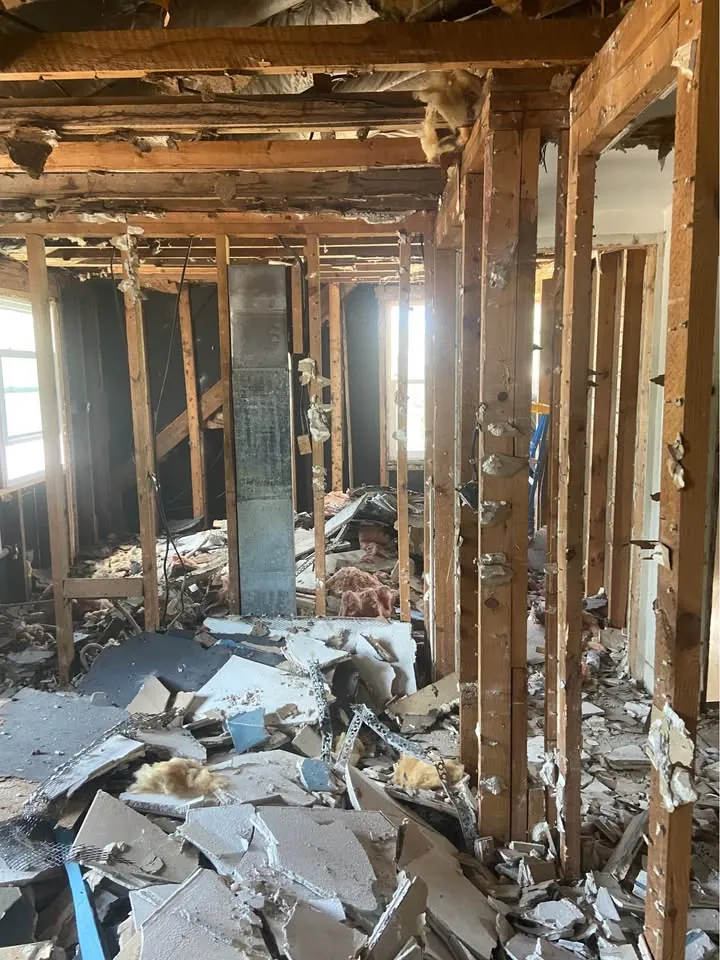
A layer of lead paint sealed under newer coats and left alone is generally stable. The hazard appears when the paint is broken up and turned into dust or chips. Demolition does exactly that. The activities that release the most lead include:
- Sanding or grinding painted surfaces
- Heating or torching old paint to strip it
- Tearing out painted plaster walls and ceilings
- Pulling and breaking painted trim, doors and window casings
Lead dust is a hazard to the workers doing the job and to anyone living in the house, so it has to be controlled from the start.
Where lead hides in midtown west houses
In the pre-war and post-war homes across midtown west, lead is most often found in the oldest paint layers on the parts of a house that were painted repeatedly over decades. Original baseboards, door and window casings, stair spindles and railings, and cast iron radiators are common spots. Exterior-facing window sashes and porch elements can hold it too. Newer paint may be lead free while the coats beneath it are not.
How the survey tells the crew what to expect
The owner's designated substances survey identifies where lead-containing paint is present and on which surfaces. That report shapes the work plan: which rooms need extra containment, which components are removed in larger pieces rather than broken apart, and how the debris is packaged. Without it, a crew is left assuming every surface might contain lead, which slows the work and still leaves gaps.
How a crew controls lead during demolition
Control measures are matched to what the survey found and how the material will be disturbed. Typical steps include:
The controls depend on what the designated substances survey found and how the planned removal will disturb each painted surface. Lightly wetting a surface before it is handled helps keep dust from becoming airborne, while removing trim or plaster in larger pieces reduces the number of broken painted edges. Sealed containment keeps chips and residue inside the work area instead of allowing them to move through the rest of the house. HEPA vacuums are used in place of ordinary shop vacuums or dry sweeping because general equipment can return fine particles to the air. Workers use the protection set for the task and keep dusty clothing and tools from becoming a route out of the zone. The carry path also matters. Debris is wrapped or bagged before it crosses clean rooms, and the threshold is maintained so boots and carts do not track residue beyond the barrier. Work surfaces are cleaned in stages as material comes down rather than leaving every chip for the end. Once removal is complete, ledges, floors, tools and the containment itself are vacuumed and wiped methodically before barriers are taken down. This sequence links the survey result to the actual work: control disturbance, prevent movement, collect debris at the source and finish with a careful cleanup that leaves no reason to reopen the zone.
- Lightly wetting surfaces to keep dust down
- Sealed containment around the work area
- HEPA vacuums rather than dry sweeping
- Respiratory protection and protective clothing for workers
- Thorough cleanup before the barriers come down
Handling and disposing of lead-painted debris
Lead-painted debris is kept separate from ordinary waste and handled the way the survey report and the receiving disposal site require. Some materials may need testing or special packaging before a facility will accept them. Planning this before the first day avoids a pile of debris with nowhere to go.
What MetroPoint does
MetroPoint reviews the survey before starting any interior demolition in an older home. Where lead paint is identified, we set up containment, use wet methods and HEPA cleanup, equip the crew properly and separate painted debris for disposal as required. Whether the scope is a full interior or targeted drywall and ceiling removal, the barriers only come down once the area is clean.
Primary planning references
Frequently asked questions
- Can I test for lead paint myself?
- Home test kits can suggest whether lead is present on a surface, but they are not a substitute for the owner's designated substances survey before a demolition is arranged. A qualified surveyor samples systematically and documents the results in a report contractors can rely on. That report is what the crew uses to plan controls and disposal.
- Is it safe to stay home while painted trim is removed?
- Occupancy must follow the material assessment and the restrictions set by the responsible project professionals. Residents must remain outside restricted work areas until the required cleanup and release are complete. Barriers and the size of the room do not by themselves establish that remaining in the home is appropriate.
- Can old painted trim be saved and reused?
- Sometimes. Trim that is carefully removed in whole pieces, without sanding or breaking, can be set aside for restoration. Any stripping or refinishing afterward should be done with lead-safe methods by someone equipped for it. Tell the crew before the work starts which pieces you want to keep so they are handled gently.
- Does lead paint change the demolition schedule?
- It can add time for setup, wet methods and more careful cleanup, especially in homes with a lot of original painted woodwork. Knowing where lead is from the survey lets the crew plan those steps from day one instead of pausing mid-job. Good planning usually keeps the overall sequence steady.