
Residential guide
Removing plaster and lath in an older midtown west house
If you own one of the older houses in Fairbank, Oakwood Village, Cedarvale or Humewood, there is a good chance your walls are plaster rather than drywall. That changes demolition day more than most homeowners expect.
Plaster is harder, heavier and messier to take down, and what sits behind it is often a surprise. Here is what to know before the first wall opens.
- Plaster and lath
- Older homes
- Renovation planning
MetroPoint Demolition planning guide · Published 2026-09-28. Confirm property-specific requirements with the responsible authority and qualified project professionals.
Heavier and dustier than drywall
Drywall comes off in sheets. Plaster breaks into chunks, crumbs and fine powder, and there is lath behind it to deal with as well. The practical effects:
- More bin loads for the same size of room
- More bagging and carrying, which takes crew time
- Heavier floor protection, since falling chunks can dent hardwood
- More fine dust, so containment and HEPA cleanup matter even more
Why the survey comes first
Older plaster, the textured coats sometimes applied on top of it and materials hidden inside the wall cavity can contain asbestos. Before anything is broken, the owner needs a designated substances survey. If the report finds asbestos, a qualified abatement contractor removes it first, and the demolition follows once that is done.
Three kinds of lath and how each comes down
Not all lath is the same, and each type behaves differently:
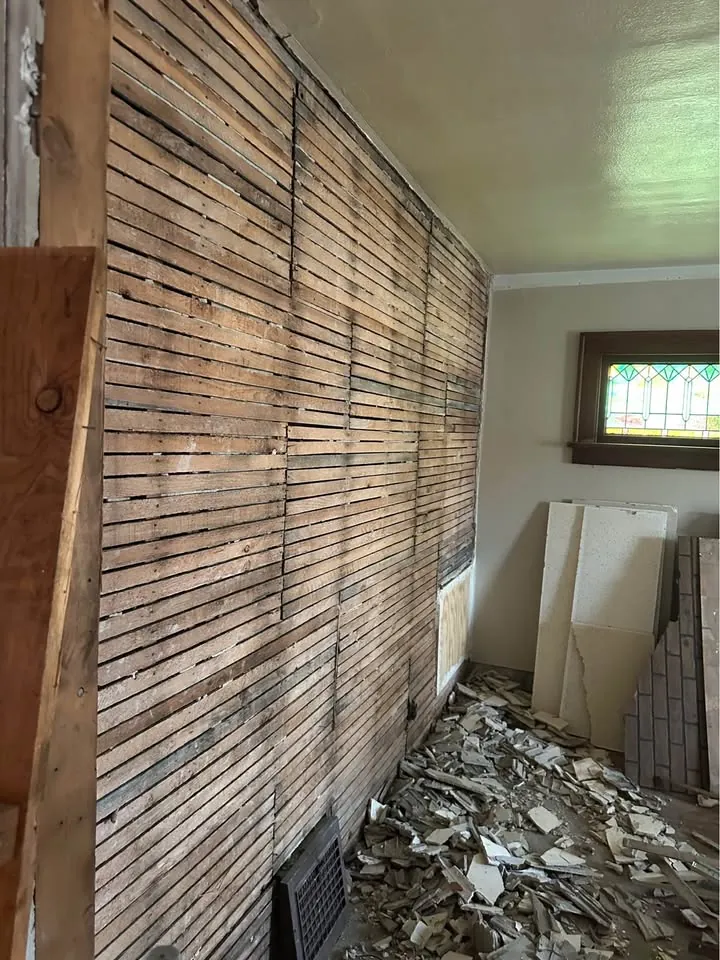
Recognizing the lath matters because each type sets a different pace and removal method. Wood lath consists of narrow strips nailed across the studs with gaps that let wet plaster form keys behind them. The plaster is separated first, then the strips are pried from each stud in a controlled direction so nails are not left projecting into the work area. Gypsum or rock lath is a board product used as a plaster base. Once the finish coat is broken, it can come away in broader pieces, although its edges crumble and still need careful bagging. Metal lath is commonly used where extra reinforcement was wanted, including corners, arches and wet rooms. Its expanded mesh can remain tightly embedded in mortar even after the surrounding plaster is fractured. The crew cuts that mesh into manageable sections with appropriate tools instead of pulling on a long, springy sheet. Cut edges are sharp, so the material is folded or bundled before it leaves the room. A wall can contain more than one type, particularly where openings were altered or a bathroom was renovated later. Opening a small area first lets the crew identify those transitions, choose the right tools and decide where to separate materials. That inspection keeps removal controlled and helps prevent a section of hidden metal lath from tearing into framing or adjacent finishes that are meant to stay.
- Wood lath: thin horizontal strips nailed to the studs. The plaster is broken off, then the strips are pried away and bundled.
- Gypsum or rock lath: gypsum boards used as a plaster base in many mid-century homes. It comes off in larger pieces, closer to drywall.
- Metal lath: expanded metal mesh found at corners, around arches and in older bathrooms. It is sharp and gets cut out with care.
What is usually behind the plaster
Opening a wall in an older house is like opening a time capsule. Common finds include knob-and-tube wiring, little or no insulation, studs that are uneven or irregularly spaced and, in some older houses, balloon framing where studs run continuously from foundation to roof. Balloon framing leaves open channels between floors that affect both fire safety and how the wall is rebuilt.
Because of this, a good crew opens a small section first, stops and looks before pulling large areas. If live wiring or an unexpected condition turns up, the right trade is called in before work continues.
When to keep a plaster wall and skim it instead
Not every plaster wall needs to go. If the wall is solid, the renovation does not require access to the cavity and the surface is only cracked or uneven, a skim coat can restore it for far less mess. Plaster also has sound and fire resistance many owners appreciate. Removing walls only where you need access for wiring, plumbing or layout changes keeps more of the house's character.
When to bring in a professional
A single small patch might be a weekend project, but full rooms of plaster are a different job. Call a professional when:
- More than one room is coming down
- The survey has identified designated substances
- Wiring or plumbing runs through the walls being removed
- You need the rest of the house kept clean while people live in it
Primary planning references
Plaster and lath reward careful planning: survey first, open small, protect the floors and decide wall by wall what really needs to go. When you are ready for a site walk, MetroPoint Demolition Toronto can scope the removal and handle it cleanly.
Frequently asked questions
- Is plaster removal really that much messier than drywall?
- Yes. Plaster breaks into chunks and fine powder rather than coming off in sheets, and the lath behind it has to be removed as a second step. The debris is heavier and fills bins faster. Good containment, floor protection and HEPA vacuuming make a big difference to how the rest of the house looks at the end of each day.
- Can I put drywall over the existing plaster instead?
- In some cases a thin drywall layer can be installed over sound plaster, which avoids demolition. It adds thickness at window and door trim, so casings may need adjusting. It also hides any problems in the cavity, so it is not a good choice where wiring or insulation needs updating. A contractor can help you weigh the tradeoffs.
- What should I do if knob-and-tube wiring is found?
- Stop work in that area and call a licensed electrician. Knob-and-tube wiring may still be live even if you thought it had been replaced. The electrician can confirm whether it is active, disconnect it safely and advise on what to replace. Insurers often ask about it too, so it is worth documenting what was found.
- Does plaster contain asbestos?
- Some older plaster and textured finishes did contain asbestos, which is why they are routinely sampled in the designated substances survey before demolition. Many plaster walls test clear, but there is no way to know without testing. If a sample is positive, a qualified abatement contractor removes that material before general demolition proceeds.