
Residential guide
Can interior demolition go ahead in a Toronto winter?
Yes, interior demolition runs through the winter in Toronto just as it does in summer. What changes is how the crew manages heat, moisture, access and daylight while the work goes on.
- Winter work
- Scheduling
- Occupied homes
MetroPoint Demolition planning guide · Published 2026-09-28. Confirm property-specific requirements with the responsible authority and qualified project professionals.
Keeping the heat on and the house sealed
Winter work starts with a plan to keep the house warm. Containment barriers, open doorways for carry-out and any exterior openings let heat escape quickly. The crew keeps exterior doors closed between loads, seals barriers tightly and makes sure the furnace and thermostat stay reachable. Before any return vents are covered, the heating contractor must confirm the airflow, protection and operating plan.
Protecting plumbing in cooler work zones
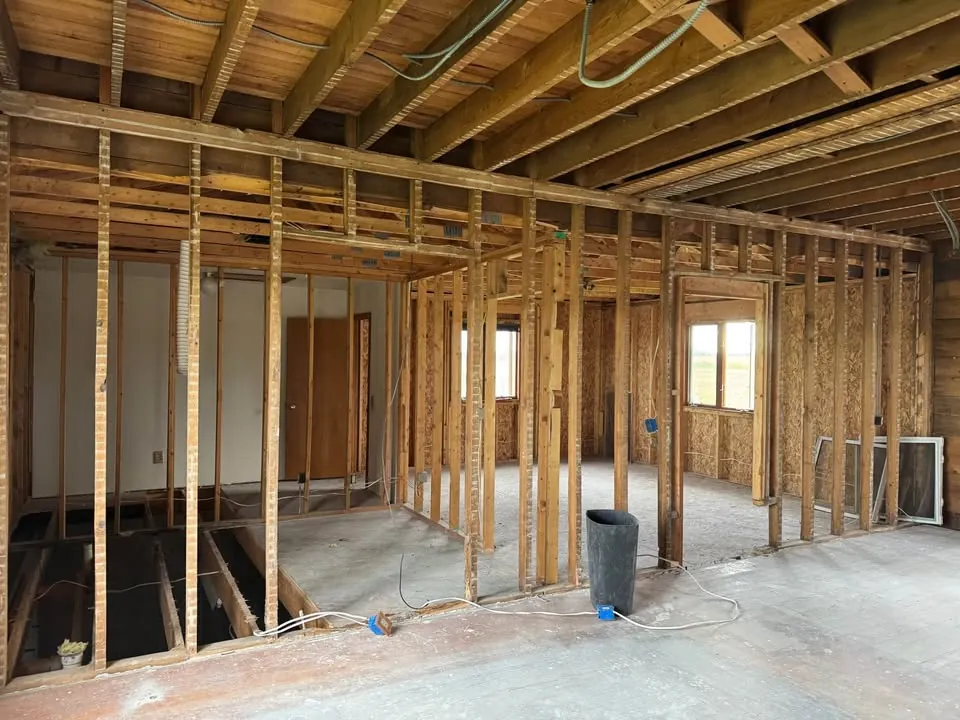
Where heat is reduced in a work zone, exposed plumbing becomes a risk. Pipes that were once hidden inside insulated walls may be open to cold air after demolition. The crew watches for:
- Supply lines along exterior walls
- Pipes near windows or openings
- Basement lines close to the foundation
Keeping a minimum temperature in the zone, or having the plumber drain lines that are no longer in use, prevents a burst pipe.
Condensation inside a sealed house
A tightly sealed house full of people, wet cleanup and cold surfaces can build up moisture. Condensation on windows and exposed framing is a sign that the air needs to move. Running exhaust fans, using a dehumidifier and briefly ventilating the work zone after wet tasks help keep moisture from soaking into framing.
Winter demolition can trap moisture inside a heated, tightly contained work zone. Wet cleanup and light misting for dust control add humidity, while cold windows, foundation surfaces and exposed exterior framing provide places for that moisture to condense. Windows are usually the first visible sign, but dampness on wood or metal at the perimeter matters more because it can remain after the glass looks dry. The crew checks these surfaces during the shift and at closing rather than waiting for a musty smell or visible pooling. Exhaust ventilation and dehumidification can reduce moisture without leaving exterior doors open for long periods. Short, controlled ventilation after a wet task also lets humid air escape while limiting heat loss. Materials that were damp before demolition are kept exposed for review rather than immediately covered by protection or stacked debris. Containment still needs to remain effective, so any air movement is planned to pull from clean areas toward the work zone and then outdoors or through suitable filtration. The furnace and return path are not used as a shortcut for drying because that can distribute dust through the house. At the end of each day, wet wiping is finished early enough for surfaces to dry, entrances are closed, and exposed pipes and framing are checked. This routine keeps winter moisture management connected to containment instead of treating heat and dust control as separate problems.
Snow, bins and a safe carry-out path
A bin needs a snow-cleared spot and the route to it needs to be safe. Before the crew arrives, the owner or their snow service clears the area where the bin will sit and the path from the door. The crew keeps that path salted or sanded during the job, because carrying debris over ice is a common cause of injury.
Salt and slush on the floors
Salt and slush tracked in on boots can stain hardwood and damage finishes. Heavy-duty runners at every entry, a boot-change or boot-cover area and regular wiping keep it under control. Floors outside the work zone are checked at the end of each day.
Shorter days, same bylaw
Daylight is short in December and January, but construction noise is still governed by Toronto Municipal Code Chapter 591 regardless of the season. Our Toronto demolition noise rules guide explains how that bylaw applies. Crews bring work lights for interior spaces and plan loud tasks inside the permitted hours.
How MetroPoint schedules winter work
MetroPoint plans winter interior and basement demolition around the conditions. We confirm heat and plumbing protection at the site walk, agree bin placement and snow clearing with the owner, lay heavy entry protection and keep doors closed between loads. Loud work is scheduled within the bylaw, and every day ends with the house sealed and warm.
Primary planning references
Frequently asked questions
- Is winter a good time for interior demolition?
- It can be. Interior work does not depend on weather in the same way exterior jobs do, and many owners plan renovations to start in spring, which means demolition can happen in the colder months. The key is planning for heat, snow and moisture so the house stays comfortable and protected during the work.
- Will the heat be off during the job?
- The heating contractor must confirm which parts of the system can operate during each stage, including airflow, venting and protection from dust. Some work may require shutdowns or temporary arrangements. Confirm these before demolition and coordinate them with the agreed occupancy and freeze-protection plan.
- Who clears snow for the bin?
- The owner is typically responsible for clearing the bin location and the path to the door before the crew arrives, either personally or through a snow removal service. During the job, the crew keeps the path safe with salt or sand. If a storm hits mid-job, clearing is coordinated so work can continue safely.
- Can a basement be demolished in winter?
- Yes. Basements are often ideal winter projects because they are below grade and less affected by outside temperatures. The main concerns are keeping the mechanical room working, protecting exposed pipes near the foundation and managing moisture. Access for carrying debris out through stairs or a side door also needs to stay clear of snow.